
Peyronie’s Disease – What Happens to the Penis and What Can You Do?
If you have noticed that your penis has started to curve, you experience pain during an erection, or you can feel a hard area beneath the skin, there is a good chance that Peyronie’s disease may be the cause.
On this page, you will not find scare tactics or exaggeration. The goal is to help you understand what Peyronie’s disease is, how it develops, and what it actually means when the penis becomes curved due to plaque formation.
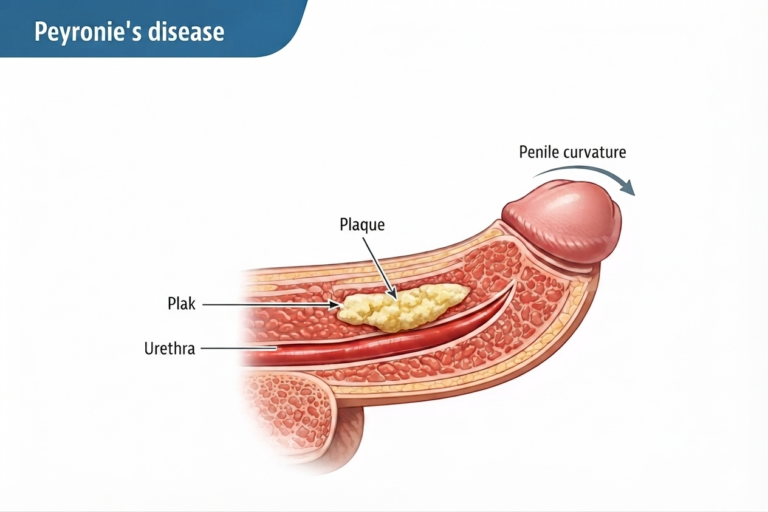
What Is Peyronie’s Disease?
Simply put, scar tissue, known as plaque, forms inside the penis. This area is no longer as elastic as the surrounding healthy tissue.
During an erection, the healthy tissue expands normally, but the area affected by plaque cannot stretch in the same way. This causes the penis to bend toward the affected side.
The curvature may be upward, downward, to the left, or to the right. In some men, the curvature is mild, while in others it can be more pronounced and painful.
How Do Men Usually Notice the Problem?
- curvature that has appeared recently
- pain during an erection
- a hard area or lump that can be felt under the skin
- the feeling that the penis is shorter than before
- weaker or unstable erections
Stages of Peyronie’s Disease
Acute Phase
This is the initial stage. During this phase, plaque forms and may increase in size. Pain is often present, and the curvature may become more pronounced. This phase can last from several months up to a year and a half.Stable Phase
Over time, the pain usually decreases or disappears. However, the curvature generally remains. The plaque no longer grows, but it rarely goes away on its own.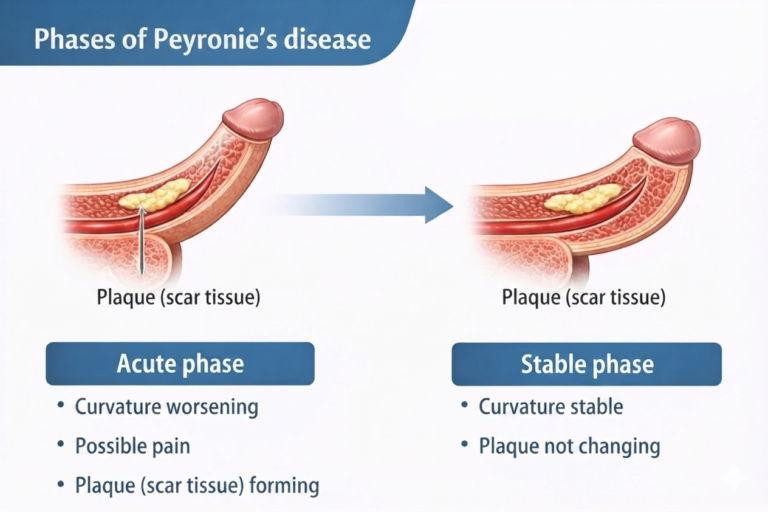
What Causes Peyronie’s Disease?
In most cases, Peyronie’s disease is associated with micro-injuries. It does not have to involve major trauma. Repeated bending, vigorous sexual intercourse, or an awkward movement while the penis is erect may be enough. Some men may also have a genetic predisposition or a connective tissue disorder. Often, it is impossible to say exactly: “That’s when it happened.” The problem simply appears.What Should You Do Next?
The first step is to understand what is happening. The second is to learn all the important details before deciding what to do next. That is why we have prepared separate guides that explain each important question in detail.Detailed Guides to Peyronie’s Disease
You do not have to read everything at once. Start with the question that concerns you most. The worst thing you can do is ignore the change and simply hope that it will disappear on its own. Get informed. Take the time to understand your options. Then decide what is best for you.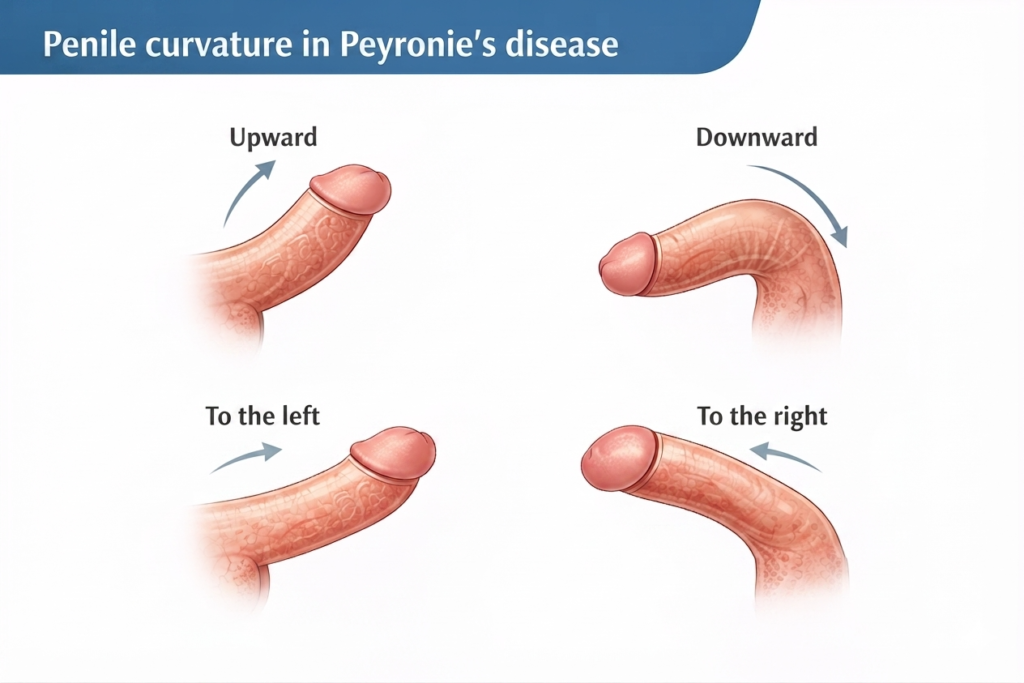
Wondering if Peyronie’s disease can go away on its own?
In some men, symptoms may change over time, but it is important to understand what is happening, which phase you are in, and when it may make sense to consider a non-invasive approach. If you have any questions or concerns, feel free to contact me discreetly by message.
I reply to every message as soon as possible. Available on weekdays from 8:00 AM to 5:00 PM (CET/CEST). Mobile: +385 91 633 23 70